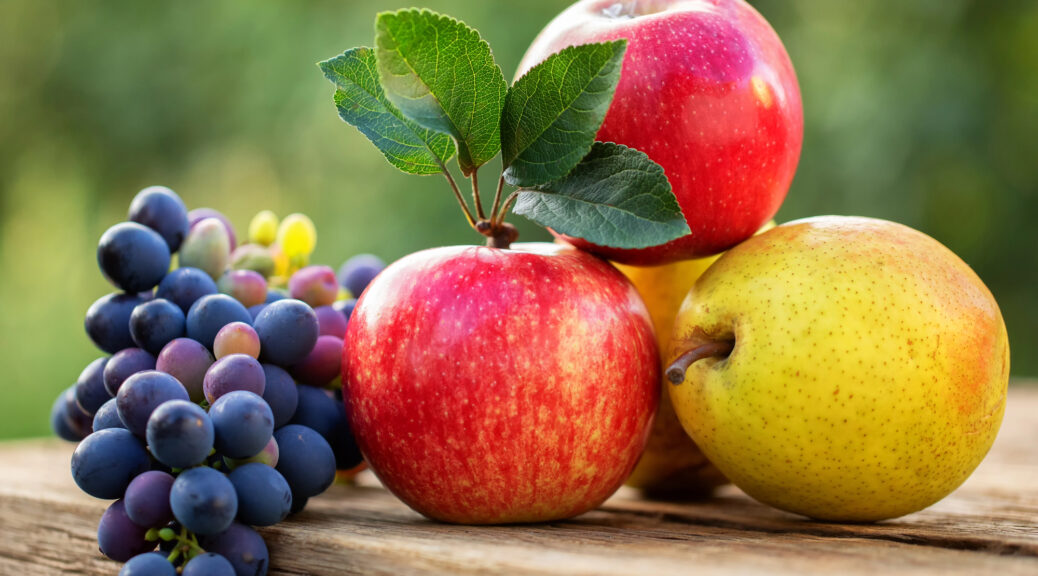
Keeping Fruit Fresh Through the Winter
Home refrigerators that held a block of ice were available in the 1800s, but they were small and didn’t hold much food. Electric refrigerators were introduced around 1913, but were quite expensive and only the rich owned one. They became a little more common in the 1920s, with more being sold in the 1930s, but even then, not everyone had one. My grandparents lived on a small farm in Illinois and didn’t even get electricity until 1950.
So until electric refrigeration was available, food was eaten seasonally unless it was preserved. Canning and pickling were common ways to preserve food, but having something fresh in the winter was a treat.
INFORMATION BELOW COMPILED FROM 1800s COOKBOOKS:
THE PRESERVATION OF FRUIT
Fresh fruit is so desirable that various methods are resorted to for preserving it in as nearly a natural state as possible. The old-fashioned plans of pickling in salt, alcohol, or vinegar, or preserving in equal quantities of sugar, are eminently unhygienic.
Quite as much to be condemned is the more modern process of keeping fruit by adding to it some preserving agent, like salicylic acid or other chemicals. Salicylic acid is an antiseptic, and like many other substances, such as carbolic acid, creosote, etc., has the power of preventing the decay of organic substances. Salicylic acid holds the preference over other drugs of this class because it imparts no unpleasant flavor to the fruit. It is nevertheless a powerful and irritating drug, and when taken even in small doses, produces intense burning in the stomach, and occasions serious disturbances of the heart and other organs. Its habitual use produces grave diseases.
The fermentation and decay of fruits as well as that of all other organic substances, is occasioned by the action of those minute living organisms which scientists call germs, and which are present everywhere. These germs are very much less active in a dry, cold atmosphere, and fruit may be preserved for quite a long period by refrigeration, an arrangement whereby the external air is excluded, and the surrounding atmosphere kept at an equal temperature of about 40° F.
KEEPING FRESH FRUIT
Of the numerous varieties of fruits grown in this country, apples and pears are about the only ones that can be kept for any length of time without artificial means. As soon as fruit has attained its maturity, a gradual change or breaking down of tissues begins. In some fruits this process follows rapidly; in others it is gradual. There is a certain point at which the fruits are best suited for use. We call it mellowness, and say that the fruit is in “good eating condition.” When this stage has been reached, deterioration and rotting soon follow.
In some fruits, as the peach, plum, and early varieties of apples and pears, these changes occur within a few days after maturity, and it is quite useless to attempt to keep them. In others, like the later varieties of apples and pears, the changes are slow but none the less certain. To keep such fruits we must avoid all conditions likely to hasten decay. We must pay careful attention to the following practical points:
1. If the fruit is of a late variety, allow it to remain on the tree as long as practicable without freezing.
2. Always pick and handle the fruit with the greatest care.
3. Gather the fruit on a dry, cool day, and place in heaps or bins for two or three weeks.
4. Carefully sort and pack in barrels, placing those most mellow and those of different varieties in different barrels. Head the barrels, label, and place in a cool, dry place where the temperature will remain equable. Some consider it better to keep fruit in thin layers upon broad shelves in a cool place. This plan allows frequent inspection and removal of all affected fruit without disturbance of the remainder.
5. The best temperature for keeping fruit is about 34° F., or 2° above freezing.
Another method which is highly recommended is to sprinkle a layer of sawdust on the bottom of a box, then put in a layer of apples, not allowing them to touch each other. Upon this, pack more sawdust, then another layer of apples, and so on until the box is filled. After packing, place up from the ground and they will keep perfectly, retaining their freshness and flavor until brought out.
The Practical Farmer gives the following rough but good way to store and keep apples: “Spread plenty of buckwheat chaff* on the barn floor, and on this place the apples, filling the interstices with the chaff. Cover with the chaff and then with straw two or three feet deep. The advantage of this is that covering and bedding in chaff excludes cold, prevents air currents, maintains a uniform temperature, absorbs the moisture of decay, and prevents the decay produced by moisture.”
The ordinary cellar underneath the dwelling house is too warm and damp for the proper preservation of fruit. After late apples are stored for the winter, a gradual change begins within the fruit. It absorbs oxygen from the air of the room, and gives off carbonic acid gas.
.When the gas is present in the air in sufficient proportion, it causes death, and a very small quantity will cause headache, listlessness, and other unpleasant effects. No doubt many troubles attributed to malaria, are due to gases from vegetables and fruits stored in the cellar.
A fruit cellar should be underneath some other building rather than the dwelling, or a fruit house may be built entirely above the ground. A house to keep fruit properly must be built upon the principle of a refrigerator. Its walls, floor, and ceiling should be double, and the space between filled with sawdust. The doors and windows should be double; and as light is undesirable, the windows should be provided with shutters. There should be a small stove for use if needed to keep a proper temperature in severe weather.
*chaff – the seed coverings and other debris separated from the seed in threshing grain
To Keep Grapes.—Select such bunches as are perfect, rejecting all upon which there are any bruised grapes, or from which a grape has fallen. Spread them upon shelves in a cool place for a week or two. Then pack in boxes in sawdust which has been recently well dried in an oven. Bran which has been dried may also be used. Dry cotton is employed by some. Keep in a cool place.
Some consider the following a more efficient method: select perfect bunches, and dip the broken end of the stems in melted paraffin or sealing wax. Wrap separately in tissue paper, hang in a cool place, or pack in sawdust.
To Keep Lemons and Oranges.—Lemons may be kept fresh for weeks by placing them in a vessel of cold water in a very cool cellar or ice house. Change the water every day. Oranges may be kept in the same way. The usual method employed by growers for keeping these fruits is to wrap each one separately in tissue paper, and put in a cool, dry place.
To Keep Cranberries.—Put them in water and keep in a cool place where they will not freeze. Change the water often, and sort out berries which may have become spoiled.
=================================================
Do You Keep Your Fruit Refrigerated or at Room Temperature? Please Leave a Comment Below.
=================================================