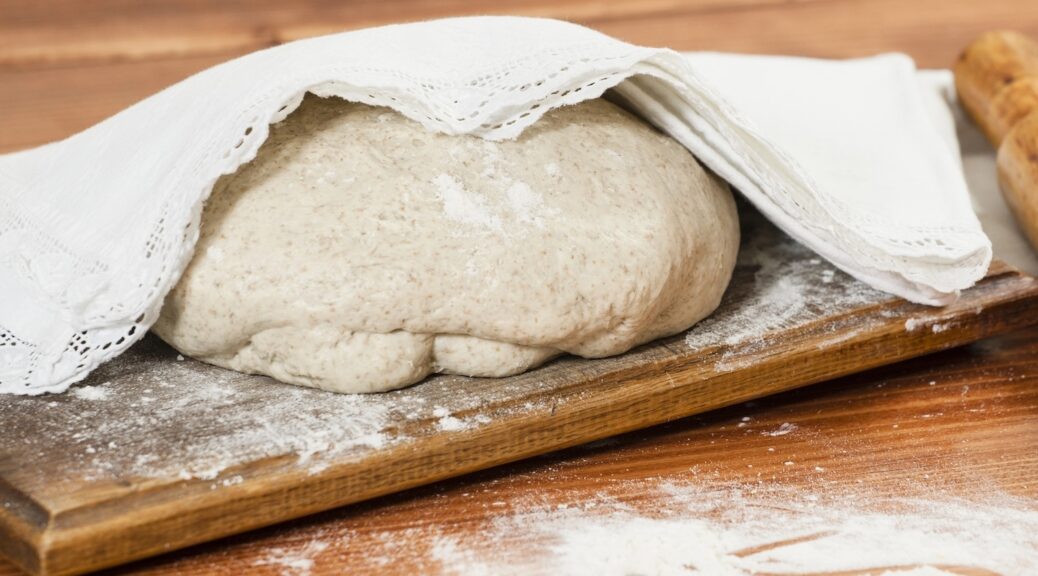
Advice on Making Family Bread
Bread was an important food for households in the 1800s, being served at most meals. Housewives and cooks had to get up extra early to start making bread, before they could begin preparing the day’s meals. Because bread-making was such a time-consuming chore, it was important to follow advice on how to bake good bread on a consistent basis.
Bakeries didn’t begin selling whole loaves of bread until the late 1800s and early 1900s, and the loaves were not pre-sliced.
It wasn’t until 1928 that Otto Rohwedder invented and commercialized the first automatic bread-slicing and wrapping machine.
By 1933, about 80% of bread sold in the U.S. was pre-sliced.
INFORMATION BELOW FROM 1800s COOKBOOKS
GENERAL DIRECTIONS.
The first thing required for making wholesome bread is the utmost cleanliness. The next is the soundness and sweetness of all the ingredients used for it. In addition to these, there must be attention and care through the whole process.
Salt is always used in bread-making, not only on account of its flavor, which destroys the insipid raw state of the flour, but because it makes the dough rise better.
Some suppose that bread wet with milk is better than if wet with water. Many experienced housekeepers say that a little butter or lard in warm water makes bread that looks and tastes exactly like that wet with milk, and that it does not spoil so soon.
In mixing with milk, the milk should be boiled—not simply scalded, but heated to boiling over hot water— then set aside to cool before mixing. Simple heating will not prevent bread from turning sour in the rising, while boiling will act as a preventative. So the milk should be thoroughly scalded and used when it is just blood warm.
Bread made with milk sometimes causes indigestion to invalids and to children with weak digestion.
FLOUR
The goodness of bread depends on the quality of the flour. Some flour will not make good bread in any way. New and good flour has a yellowish tinge, and when pressed in the hand is adhesive. Poor flour is dry and will not retain form when pressed. Poor flour is bad economy, for it does not make as nutritious bread as does good flour.
Flour loses its sweetness by keeping, and this is the reason why sugar is put in the recipes for bread. The best kind of flour, when new and fresh ground, has eight percent of sugar; and when such flour is used, the sugar may be omitted.
Some people make bread by mixing it so that it can be stirred with a spoon. But the nicest kind of bread can be made only with a good deal of kneading.
YEAST
Home-made yeast is generally preferred to any other. Compressed yeast, as now sold in most grocery stores, makes fine light, sweet bread, and is a much quicker process, and can always be had fresh. The most important article of food is good family bread, and the most healthful kind of bread is that made of coarse flour and raised with yeast. All that is written against the healthfulness of yeast is owing to sheer ignorance, as the most learned physicians and chemists will affirm.
The yeast must be good and fresh if the bread is to be digestible and nice. Stale yeast produces, instead of vinous fermentation, an acetous fermentation, which flavors the bread and makes it disagreeable. A poor, thin yeast produces an imperfect fermentation, the result being a heavy, unwholesome loaf.
Too small a proportion of yeast or insufficient time allowed for the dough to rise, will cause the bread to be heavy. Other common causes of failure are using yeast which has been frozen, or has had hot liquid poured over it.
MIXING AND KNEADING
If either the sponge* or the dough be permitted to overwork itself—that is to say, if the mixing and kneading be neglected when it has reached the proper point for either—sour bread will probably be the consequence in warm weather, and bad bread in any. The goodness will also be endangered by placing it so near a fire as to make any part of it hot, instead of maintaining the gentle and equal degree of heat required for its due fermentation.
An almost certain way of spoiling dough is to leave it half made, and to allow it to become cold before it is finished.
*sponge – made of flour, water, and yeast and allowed to ferment until it reaches a desired growth; then it is added to bread dough.
THE FIRE
Have the fire prepared so it will not need replenishing during the hour required for the baking. The bread rises after it goes in the oven, and is likely to rise unevenly if the oven is hotter on one side than the other. Therefore, it should be watched and turned carefully if necessary. At the end of ten to fifteen minutes the top should be browned, and this will arrest the rising. If the oven is too cool, the bread is likely to rise so much as to run over the pan, or to have a hole in the center. If the oven is too hot it will make a crust too soon, the center be underdone, and the crust be too thick.
THE OVEN
As a general rule, the oven for baking bread should be rather quick* and the heat so regulated as to penetrate the dough without hardening the outside. The oven door should not be opened after the bread is put in until the dough is set or has become firm, as the cool air admitted will have an unfavorable effect upon it.
Bread is better in small loaves. Let your pans be of tin (or better, of iron), eight inches long, three inches high, three inches wide at the bottom, and flaring so as to be four inches wide at the top. This size makes more tender crust, and cuts more neatly than larger loaves.
Oil the pans with a swab and sweet butter or lard. They should be well washed and dried, or black and rancid oil will gather.
BAKED BREAD
When the bread is baked, remove the loaves immediately from the pans and place them where the air will circulate freely around them, and thus carry off the gas which has been formed, but no longer needed.
Never leave the bread in the pan or on a pin table to absorb the odor of the wood. If you like crusts that are crisp, do not cover the loaves. To give the soft, tender, wafer-like consistency which many prefer, wrap them while still hot in several thicknesses of bread-cloth. When cold put them in a stone jar, removing the cloth, as that absorbs the moisture and gives the bread an unpleasant taste and odor. Keep the jar well covered and carefully cleansed from crumbs and stale pieces. Scald and dry it thoroughly every two or three days. A yard and a half square of coarse table linen makes the best bread-cloth. Keep in good supply; use them for no other purpose.
*hot or quick oven – about 400-450 degrees Fahrenheit.
=================================================
Have You Ever Made Bread or Biscuits from Scratch? Please Leave a Comment Below.
=================================================