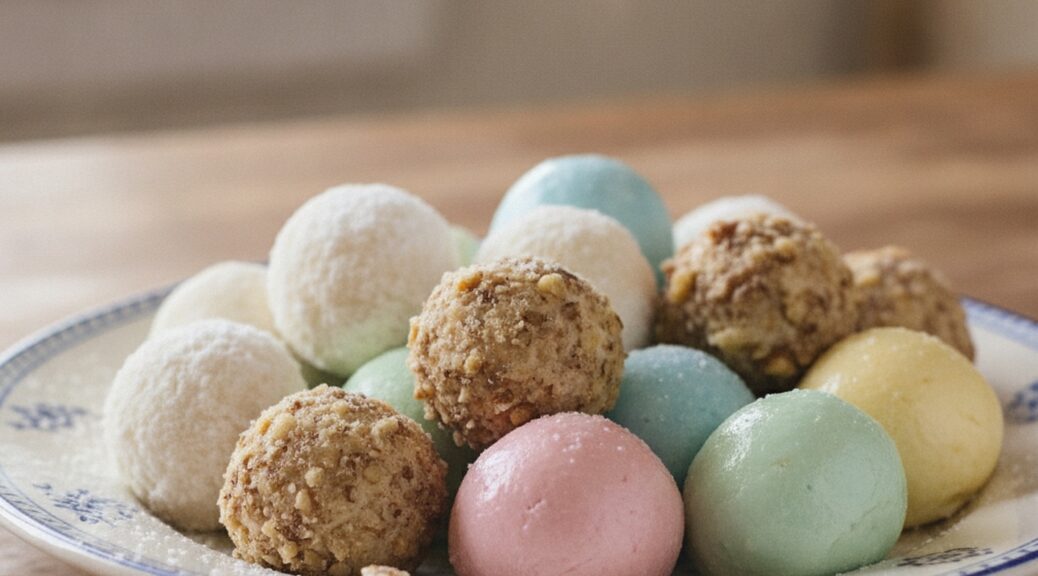
Making French Cream Candies
It sure was a lot of work making candy in the 1800s. There were no electric mixers to help beat the sugar mixture, and you had to learn how to boil it into a syrup with just the right consistency. The recipes below are from “The Whitehouse Cookbook (1887) by F. L. Gillette and Hugo Ziemann.”
Click here to access the cookbook for free on the Project Gutenberg website.
RECIPES FROM THE WHITE HOUSE COOKBOOK, 1887
CONFECTIONERY
In the making of confections the best granulated or loaf sugar* should be used. (Beware of glucose mixed with sugar.) Sugar is boiled more or less, according to the kind of candy to be made, and it is necessary to understand the proper degree of sugar boiling to operate it successfully.
Occasionally sugar made into candies, “creams” or syrups, will need clarifying. The process is as follows: Beat up well the white of an egg with a cupful of cold water and pour it into a very clean iron or thick new tin saucepan. Put into the pan four cups of sugar, mixed with a cup of warm water. Put on the stove and heat moderately until the scum rises. Remove the pan and skim off the top, then place on the fire again until the scum rises again. Then remove as before, and so continue until no scum rises.
This recipe is good for brown or yellowish sugar; for soft, white sugars, half the white of an egg will do, and for refined or loaf sugar a quarter will do.
The quantities of sugar and water are the same in all cases. Loaf sugar will generally do for all candy-making without further clarification. Brown or yellow sugars are used for caramels, dark-colored cocoanut, taffy, and pulled molasses candies generally.
Havana is the cheapest grade of white sugar and a shade or two lighter than the brown.
Confectioners’ A is superior in color and grain to the Havana. It is a centrifugal sugar—that is, it is not re-boiled to procure its white color, but is moistened with water and then put into rapidly-revolving cylinders. The uncrystalized syrup or molasses is whirled out of it, and the sugar comes out with a dry, white grain.
*loaf-sugar – sugar sold in a hard block, which has to be broken and then pounded into sugar granules.
FRENCH CREAM CANDY
Put four cups of white sugar and one cup of water into a bright tin pan on the range and let it boil without stirring for ten minutes. If it looks somewhat thick, test it by letting some drop from the spoon. If it threads*, remove the pan to the table. Take out a small spoonful, and rub it against the side of a cake bowl. If it becomes creamy and will roll into a ball between the fingers, pour the whole into the bowl. When cool enough to bear your finger in it, take it in your lap, stir or beat it with a large spoon, or pudding-stick*. It will soon begin to look like cream, and then grow stiffer until you find it necessary to take your hands and work it like bread dough.
If it is not boiled enough to cream, set it back upon the range and let it remain one or two minutes, or as long as is necessary, taking care not to cook it too much. Add the flavoring as soon as it begins to cool. This is the foundation of all French creams. It can be made into rolls and sliced off, or packed in plates and cut into small cubes, or made into any shape imitating French candies. In working, should the cream get too cold, warm it.
*thread (for a sugary recipe) – to take a small amount of cooked syrup from a pot onto a spoon, and letting it drip back in. If it spins a long thread, like a spider web, it’s ready.
*pudding stick – a kitchen utensil that has a long, narrow handle and a broa, flat end, similar to a paddle. It’s used to stir thick mixtures.
—————————————————————————————
To be successful in making this cream, several points are to be remembered.
~ When the boiled sugar is cool enough to beat, if it looks rough and has turned to sugar, it is because it has been boiled too much, or has been stirred.
~ If, after it is beaten, it does not look like lard or thick cream, and is sandy or sugary instead, it is because you did not let it get cool enough before beating.
~ It is not boiled enough if it does not harden so as to work like dough, and should not stick to the hands; in this case put it back into the pan with an ounce of hot water, and cook over just enough, by testing in water as above. After it is turned into the bowl to cool, it should look clear as jelly. Practice and patience will make perfect.
FRUIT CREAMS
Add to “French Cream” raisins, currants, figs, a little citron, chopped and mixed thoroughly through the cream while quite warm. Make into bars or flat cakes.
WALNUT CREAMS
Take a piece of “French Cream” the size of a walnut. Having cracked some English walnuts, using care not to break the meats, place one-half of each nut upon each side of the ball, pressing them into the ball.
Walnut creams can be made by another method: First take a piece of “French Cream,” put it into a cup and setting the cup into a vessel of boiling water, heating it until it turns like thick cream; drop the walnut meats into it, one at a time, taking them out on the end of a fork and placing on buttered paper; continue to dip them until all are used, then go over again, giving them a second coat of candy. They look nice colored pink and flavored with vanilla.
CHOCOLATE CREAMS
Use “French Cream,” and form it into small cone-shaped balls with the fingers. Lay them upon paper to harden until all are formed. Melt one cake of Baker’s chocolate in an earthen dish or small basin. Set it in the oven and it will soon melt; do not let it cook, but it must be kept hot. Take the balls of cream, one at a time, on the tines of a fork, pour the melted chocolate over them with a teaspoon and when well covered, slip them from the fork upon oiled paper.
COCONUT CREAMS
Take two tablespoons of grated coconut and half as much “French candy.” Work them both together with your hand till the coconut is all well mixed in it. If you choose, you can add a drop of vanilla. If too soft to work into balls, add confectioners’ sugar to stiffen. Make into balls the size of hazelnuts and dip twice, as in the foregoing recipes, flavoring the melted “French Cream” with vanilla.
VARIEGATED CREAMS
Make the “French Cream” recipe, and divide into three parts, leaving one part white, color one pink with cochineal* syrup, and the third part color brown with chocolate, which is done by just letting the cream soften and stirring in a little finely grated chocolate. The pink is colored by dropping on a few drops of cochineal syrup while the cream is warm and beating it in. Take the white cream, make a flat ball of it, and lay it upon a buttered dish, and pat it out flat until about half an inch thick. If it does not work easily, dip the hand in alcohol. Take the pink cream, work in the same way as the white and lay it upon the white; then the chocolate in the same manner, and lay upon the pink, pressing all together. Trim the edges off smooth, leaving it in a nice, square cake, then cut into slices or small cubes, as you prefer. It is necessary to work it all up as rapidly as possible.
*cochineal – a red dye for coloring foods made of the dried and pulverized bodies of female cochineal insects.
RASPBERRY CREAMS
Stir enough confectioners’ sugar into a teaspoon of raspberry jam to form a thick paste. Roll it into balls between the palms of your hands. Put a lump of “French Cream” into a teacup and set it into a basin of boiling water, stirring it until it has melted; then drop a few drops of cochineal coloring to make it a pale pink, or a few drops of raspberry juice, being careful not to add enough to prevent its hardening. Now dip these little balls into the sugar cream, giving them two coats. Lay aside to harden.
Remember to keep stirring the melted cream, or if not it will turn back to clear syrup.
NUT CREAMS
Chop almonds, hickory nuts, butternuts or English walnuts quite fine. Make the ‘”French Cream,” and before adding all the sugar, while the cream is quite soft, stir into it the nuts, and then form into balls, bars or squares. Several kinds of nuts may be mixed together.
=================================================
Do You Ever Make Homemade Candy? Please Leave a Comment Below.
=================================================