Ways to Preserve Vegetables for the Winter
During most of the 1800s, people ate fresh garden produce seasonally. People didn’t begin home canning until the invention of the Mason jar in 1858 and it took a while for canning to become popular.
So they needed to preserve their produce to have during the winter months, and making sure it was as fresh tasting as possible. No one wanted mushy or rotten vegetables because they weren’t stored properly.
RECIPES BELOW FROM 1800s COOKBOOKS
PROPER PLACE FOR PRESERVING ROOTS AND FRUIT
The cellar or room where roots and fruits are to be kept should be a dry one if possible, and not subject to freezing. Small double or treble sash windows and a double door prevent materially the ingress of frost from these places. A plentiful supply of shelves and hooks overhead to attach lines are desirable. Shelves fixed up in common cellars will do.
TO KEEP ONIONS AND OTHER BULBOUS ROOTS
Spread them thinly on the shelves of such a cellar or closet. Potatoes should be kept high and dry from the bottom of the cellar or they will rot, especially as the weather moderates towards spring.
PRESERVING POTATOES BY DRYING
Wash them, cut them in pieces, steep them forty-eight hours in lime water, then forty-eight hours in fresh water. Dry them in an oven. One hundred parts of fresh potatoes will give thirty so prepared and dried. In this state they may be kept for years, or ground at once into flour. This flour mixed with a third part of that of rye, is said to make an excellent bread.
It is likewise proposed to moisten potatoes dried as above, with olive oil, and then to grind them, and use them as coffee.
TO PRESERVE PARSNIPS, CARROTS AND BEETS, ALL THE WINTER
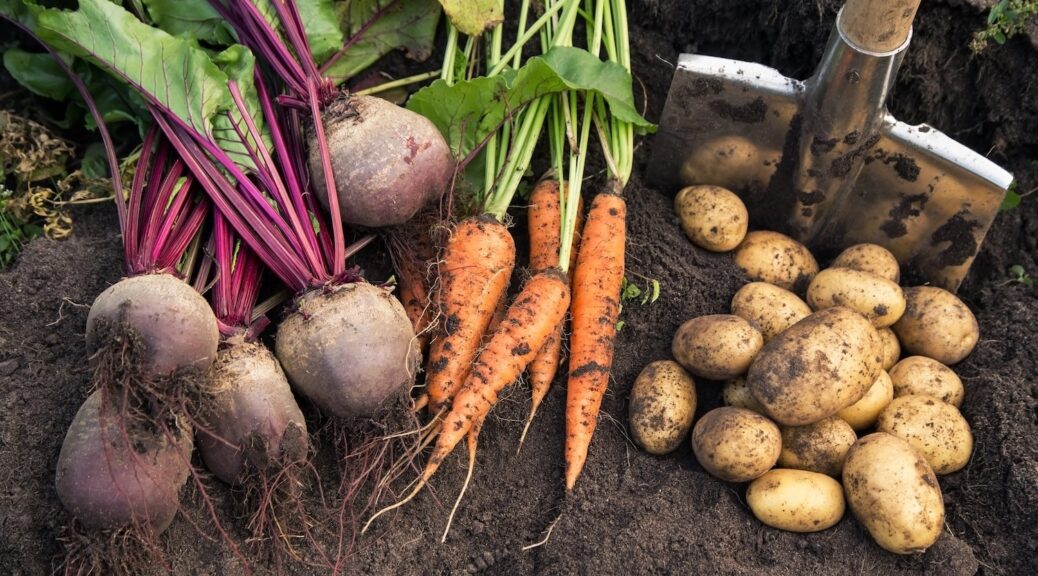
A little before the frost sets in, draw your beets or parsnips out of the ground and lay them in the house, burying their roots in sand to the neck of the plant. Arrange them one by another in a shelving position; then another bed of sand, and another of beets, and continue this order to the last. By pursuing this method, they will keep very fresh. When they are wanted for use, draw them as they stand, not out of the middle or sides.
AN EXCELLENT WAY TO PRESERVE PUMPKINS
Boil and strain them through a sieve fit for pies. Put them into dishes and dry them in the oven or sun till hard and dry. Lay them up for use and they will keep for years. When to be used, dissolve it in milk and it is as good as when first boiled.
TO PRESERVE CABBAGES, LETTUCE, AND OTHER SIMILAR PLANTS
These plants may be preserved throughout the winter if they be taken out of the ground with their main roots entire, in perfectly dry weather, at the end of the season, and partially immersed in dry sand. They should be kept in a close dry cellar, of a cold, but not freezing temperature.
TO PRESERVE BUSH BEANS FRESH AND GOOD UNTIL WINTER
Take half a bushel of beans of a suitable size and age for eating green. String and break them, then put them into a cask, first sprinkling in salt, then a layer of beans, and so alternately till the cask is full. Then add a weak brine* so as to cover them. Take out for use and freshen twenty-four hours in water, often changing it. Boil three hours in fresh water.
*brine – water saturated with salt.
TO PRESERVE CUCUMBERS
Take large cucumbers and lay them in salt and water that will bear an egg,* for three days. Set them on the fire with cold water and a small lump of alum. Boil them a few minutes, make a thin syrup with sugar and pour on them. Stand two days, then make a rich syrup. Lay them in a jar and pour it on them. Put it into the kettle again, simmer five or ten minutes, set it by until the next day, then boil again. Put it in glasses and set away for use.
*bear an egg – to make a brine with enough salt so that an egg will float.
PARSLEY
To preserve Parsley fresh and green, put any quantity of green parsley into a strong pickle of salt and water boiling hot, and keep for use.
HOW TO KEEP GREEN PEAS TILL WINTER
Take young peas, shell and put them in a collander to drain. Then lay a cloth four or five times double on a table, and spread them on, dry them very well. Have your bottles ready, fill them, cover over with mutton suet fat, then it is a little soft. Fill the necks almost to the top, cork up, tie a bladder* and leather over them and set away in a dry cool place.
*bladder – the bladder from an animal was used to cover mincemeat, potted meat, etc., to exclude the air.
=================================================
How do You Store Your Garden Vegetables? Please Leave a Comment Below
=================================================
2 thoughts on “Ways to Preserve Vegetables for the Winter”
Excellent article. I dehydrate several of these vegetables but it is fun to learn how they accomplished this feat before dehydrators.
It is such a treat to go to a web page and not be bombarded with pop up ads!
Thanks for reading my blog posts. I hate pop-up ads, too, and won’t have them on my site.