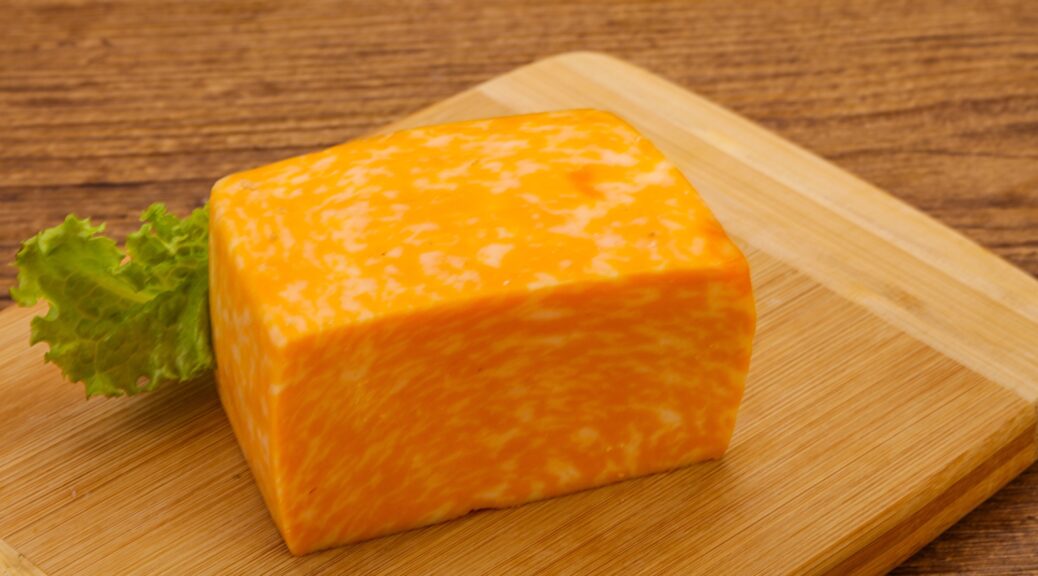
How to Make Cheese
Years ago, I received a cheese-making kit for Christmas. It called for a gallon of milk and I couldn’t believe the small amount of cheese it made. I thought I did something wrong. Now, as I’m going through 1800s cookbooks, I find it actually takes about five quarts of milk to make a pound of cheese.
If you want to try making your own cheese, look at modern recipes. Milk in the 1800s was not pasteurized and could sour without spoiling. Sour milk was required for cheese making; whether allowing milk to sour naturally or by using rennet. Instructions are vague and varied, especially on curing time. Cookbooks provided guidance, but you needed to gain experience through trial and error.
INFORMATION BELOW FROM 1800s COOKBOOKS
MAKING CHEESE
Persons living in the country sometimes have more milk than they can use. They can make cheese, prepared from curdled* milk and cleared from the whey.* The best time for making cheese is when the pasture is in perfection. Cheese differs very much in quality and flavor according to the pasture in which the cows feed, and the manner in which the article is made.
After cheeses begin to dry, (or ripen, as it is called,) it is the custom in some dairy-farms, to place the cheeses in the haystack, and keep them there among the hay for five or six weeks. This is said greatly to improve their consistence and flavor. Cheeses are sometimes ripened by putting them every day in fresh grass.
*curdle -milk that congeals, sours, clots, or ferments. Curdling is intentional in making cheese, but not in sauces and custards.
*whey – the liquid separated from the solid part of milk after its sours.
MILK REQUIREMENTS FOR CHEESE PRODUCTION
The amount of milk needed to produce one pound of cheese varies depending on the type of milk used. Here are the specifics:
- Cow Milk: Approximately 10 pounds (or 5 quarts) of cow milk is required to make one pound of cheese.
- Goat Milk: The same amount, about 10 pounds (or 5 quarts), is needed for goat milk cheese.
- Sheep Milk: Only about 6 pounds (or 3 quarts) of sheep milk is necessary to produce one pound of cheese.
ARTICLES USED IN MAKING CHEESE
The articles used in making cheese should be kept sweet and clean as in making butter. They should be scalded daily, and never be set away until perfectly dry. The conveniences wanted are a large pine tub, painted white inside; a cheese basket and a ladder on which to set the basket over the tub; two cheese-hoops, large or small, according to the size of the dairy; two large square strainers of thin coarse linen; two circular boards called followers; and a brass kettle large enough to hold several pails of milk. Presses used are of various constructions. The most convenient one has a lever and weight, and for making very large cheeses, a windlass should be attached to the end of the lever.
TO MAKE CHEESE FROM SOUR MILK
When the curd* is freed from the whey, kneaded and pressed to expel it entirely, it becomes cheese. If it be well dried, it does not change by exposure to the air. But if it contains moisture, it soon putrefies. It therefore requires some salt to preserve it, and this acts likewise as a kind of seasoning.
When the curd is well formed, cut it in squares, making the knife go down to the bottom of the tub at every stroke. Let it stand fifteen minutes for the whey to separate. Then break it up very gently, putting the hand down through all parts. It should be done gently, or some of the milk will be lost in the whey. This causes white whey; the greener the whey, the richer the cheese. Lay the strainer on the top of the curd, and dip off the whey that presses up through, until you have dipped about a third of it. Put this immediately over the fire to heat.
When hot, but not boiling, pour it back upon the curd and then break up the curd small and as quickly as possible with your hand. Then lay the strainer into the cheese basket and pour the curd into it to drain. When this is done, return it to the tub, salt it, put it again into the strainer, and then into the cheese-hoop. Do not twist up the strainer, but lay it over smooth. Lay a follower* upon it, put it into the press, and press it tight. Let it remain two days, and increase the pressure four or five times meanwhile, turning the cheese over each time. If you make cheese every day, you will need two presses.
After this, turn the cheese out upon a shelf, in a dark closet or room, secure from flies. Rub every day the side that has lain upon the shelf, and turn it over. Rub it all over with butter often. Butter made of whey-cream, is generally used for this purpose. If cheese is rich, a strip of new American cotton, as wide as the thickness of the cheese, should be sewed tight around it when first taken from the press. Without this, it would soon melt out of shape. During the season when flies are about, rub cheese now and then with butter sprinkled with cayenne pepper.
*curd – a soft, white substance formed when milk sours, used as the basis for cheese. The increased acidity causes the milk proteins to tangle into solid masses, or curds.
*follower – a specially fitted lid that slides inside a cheese mold and sits directly on top of the cheese curds. When the press pushes down on the follower, it distributes weight evenly to expel the remaining whey and form a solid wheel of cheese.
RENNET
An indispensable requisite in making cheese is good rennet.* Nothing else will answer the purpose. Different substitutes have from time to time been tried, but all have met with indifferent success, or absolutely failed. Acids will produce coagulation, but they spoil the quality of the cheese
Rennet differs in strength, so that no precise rule can be given for quantity, but say about half a tea-cup full to two pails of milk.
*rennet – used to coagulate liquid milk, transforming it into a solid gel and separating it into solid curds and liquid whey. It was traditionally harvested from the stomach linings (specifically the fourth stomach) of unweaned animals like calves, lambs, or kids. Today rennet can be derived from certain plants, fungi, molds or yeasts.
TO MAKE CHEESE WITH RENNET
Put four gallons of new milk in a clean tub that is kept for the purpose. Skim your night’s milk and put two gallons of it over the fire. When it is near boiling, put it back in the tub holding the rest of the night’s new milk. It should be rather more than milk warm. If it is too warm, the cheese will have a strong taste.
The day before you make cheese, put a piece of rennet three inches square in a tea-cup of water, and stir it in the milk. Cover the tub and let it stand in a warm place. When the curd begins to form, cut it in squares with a long wooden knife, and spread a thin towel over it.
When the whey comes through the cloth, you can dip it off with a saucer. Then put a thin towel in the cheese vat, put in the curd, spread the cloth over the top, put on the lid, and press it moderately about half an hour. Then put it back in the tub and salt it to your taste. Mix it well, and if you want it very rich, put in a fourth-pound of butter. It is always better to skim the night’s milk and put in butter, as the cream is apt to press out.
Have a clean cloth in the vat, put in the curd, close it over and put on the cover. If you have no cheese press, a heavy stone will answer the purpose. Press it very gently at first to keep the richness from running out. The next morning, draw it out by the cloth, wash and wipe the vat, put in a clean cloth, and turn the cheese upside down.
Do this morning and evening for two days. When you take out the cheese and put it on a clean board, set it where the mice and flies will not get at it. Rub it every morning with a little butter and turn it three times a day. Dust it over with cayenne pepper if you cannot keep it from the flies. If it should crack, plaster on a piece of white paper with butter. It is fit for use in two weeks.
Cheese made in this way has a rich, mild taste, and most persons are fond of it. If you get eight gallons of milk a day, you may make cheese twice a week, and still have butter for the family. You should keep four thin cloths on purpose for cheese.
Cover the cheese with nettle leaves, and put it between 2 pewter plates, to ripen. It will be ready in three weeks.
TO COLOR CHEESE
You may enrich the color of the cheese by a little annatto* of which procure a small quantity from the druggist, powder it, tie it in a muslin rag, and hold it in the warm milk, (after it is strained,) pressing out the coloring matter with your fingers.. Anatto is perfectly harmless.
*annatto – a red or yellowish red dyeing material, prepared from the pulp surrounding the seeds of a tree (Bixa orellana). It is used for coloring cheese, butter, etc.
DUTCH CHEESE
Ingredients
1 quart sour milk
1⁄3 to 1 teaspoon salt
1⁄4 cup sour or sweet cream (or 1 large tablespoon butter)
Method—The milk should be freshly sour to get the best flavor. This is best obtained by adding a little sour milk to five or six times the amount of sweet milk. It should be kept in a warm place (the back of the stove) until the curd of the milk is thick and smooth and the whey is watery and has risen to the top. Drain in a cheese cloth bag until dry. Add cream (or butter) and salt. If the process needs to be hurried stir into the milk a cup full of nearly boiling water. Leave to settle before draining. As the cheese is very rich in protein it easily becomes tough by overheating. For the same reason it is very nourishing.
STILTON CHEESE
This rich and relishing article is made in the following manner. The night’s cream is put into the morning’s milk, with the rennet. When the curd is come, it is not broken, as is usually done with other cheese, but taken out whole, and put into a sieve to drain. Here it is pressed till it becomes firm and dry. Then it is placed in a wooden hoop made to fit it, in order to prevent its breaking. After being taken out of the hoop, the cheese is bound with cloths, which are changed every day till it is sufficiently firm to support itself. The cloths are then removed and the cheese is rubbed with a brush and turned every day. The rennet bag should be kept perfectly sweet and fresh. If it be in the least degree tainted, the cheese will never have a good flavor.
SAGE CHEESE
To make this kind of cheese, bruise the tops of young red sage in a mortar, with some leaves of spinach, and squeeze out the juice. Mix it with the rennet in the milk, more or less, according as the taste and color may be preferred. When the curd is come, break it gently, and put it in with the skimmer, till it is pressed two inches above one vat. Press it eight or ten hours, salt and turn it every day.
===========================================================
Do You Like Cheese? What is Your Favorite Kind? Please Leave a Comment Below.
============================================================